Biochar in Thai Rice Farming: How Crop Waste Becomes Soil That Holds Carbon for 100+ Years
How crop waste becomes soil that holds carbon for 100+ years.
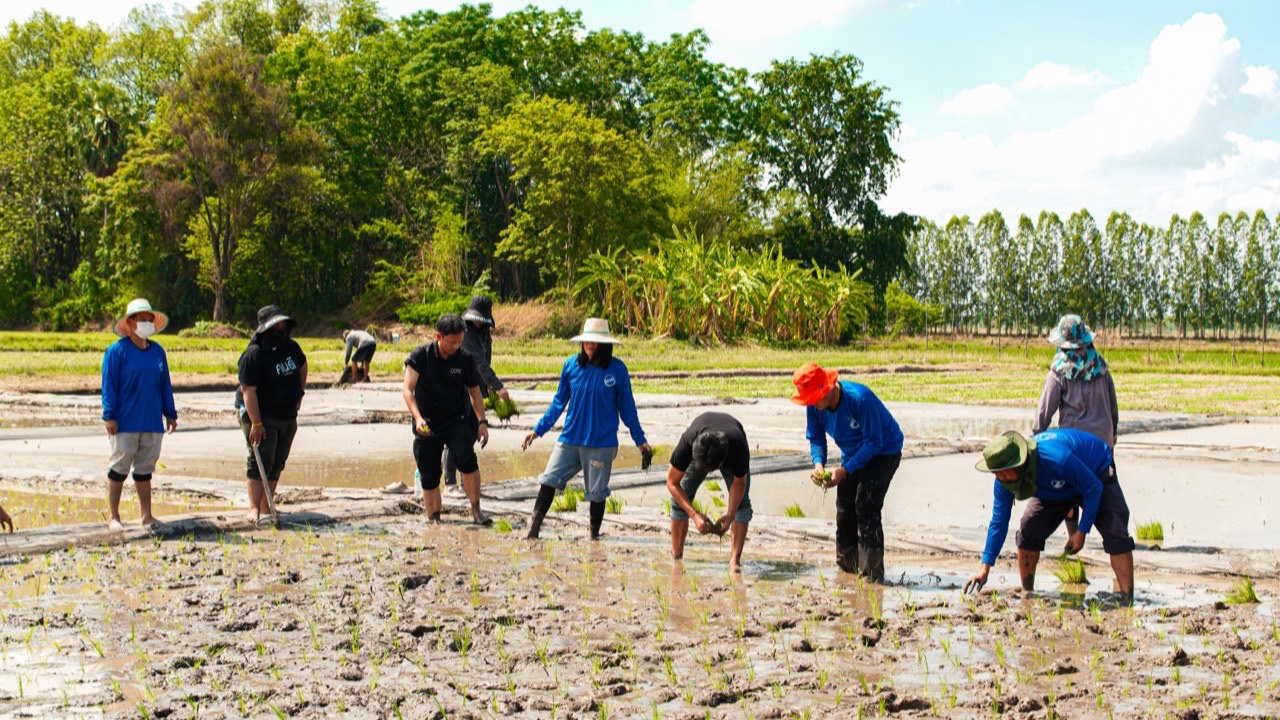
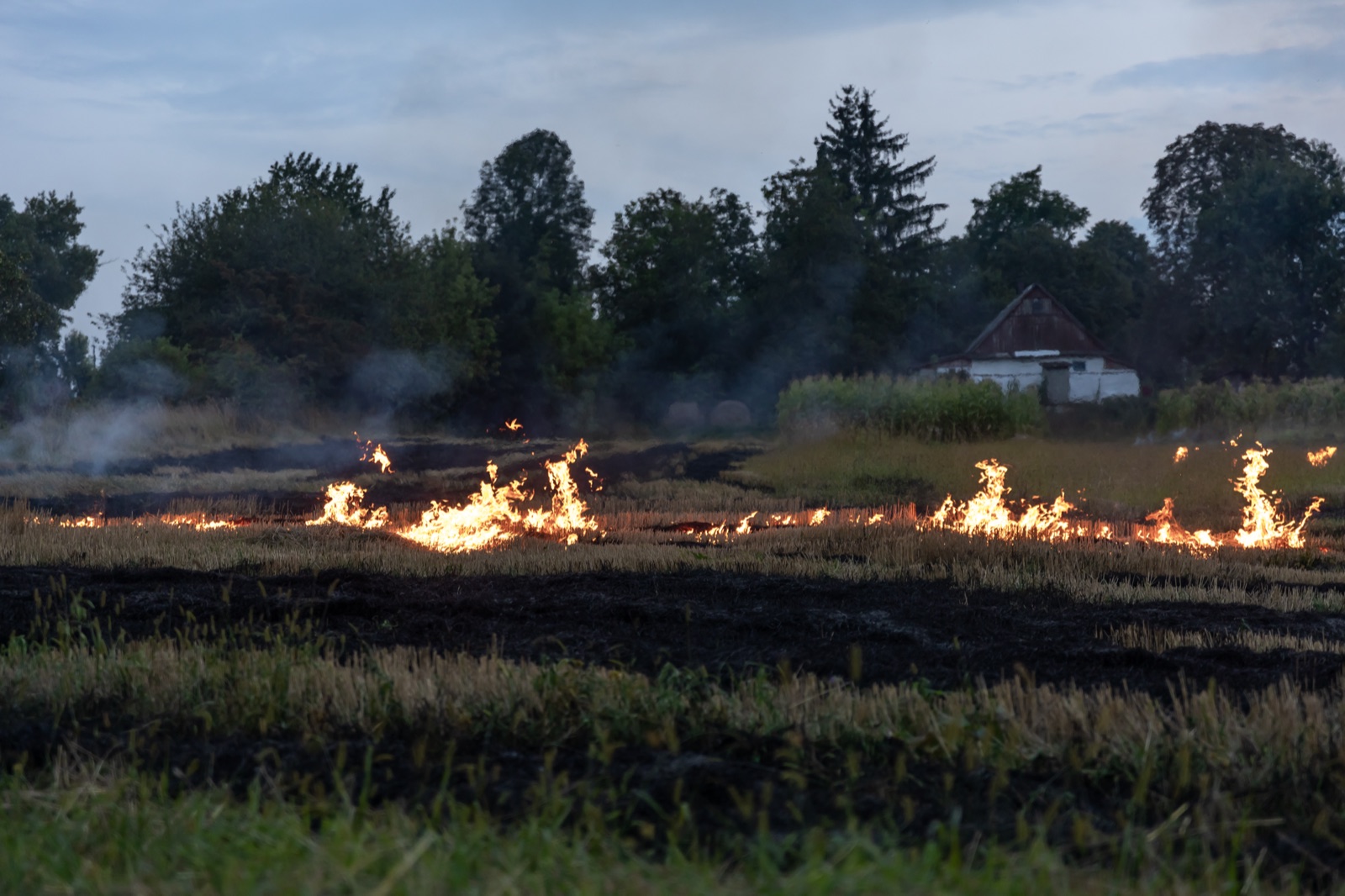
Every rice harvest produces two things in almost equal measure: the grain that gets sold, and the straw that gets left behind. The grain feeds the country. The straw, for the most part, gets burned. But that same straw, handled differently, can go back into the field as one of the most durable soil improvements available to a Thai farmer, and pull a meaningful amount of carbon out of the atmosphere on the way.
This is a practical look at how that works: what biochar does in a rice paddy, what the research actually shows, and how to use it well.
From straw to biochar: what happens
Biochar is what you get when rice straw is put through pyrolysis: heated in a low-oxygen environment so that it transforms instead of burning. The straw does not turn to ash. It becomes a stable, porous, carbon-rich solid.
The key figure is this. Roughly half of the carbon held in the original straw is locked into a form that resists decomposition for a very long time. Where open burning releases that carbon in hours, biochar holds onto it for centuries.
What biochar does in a paddy
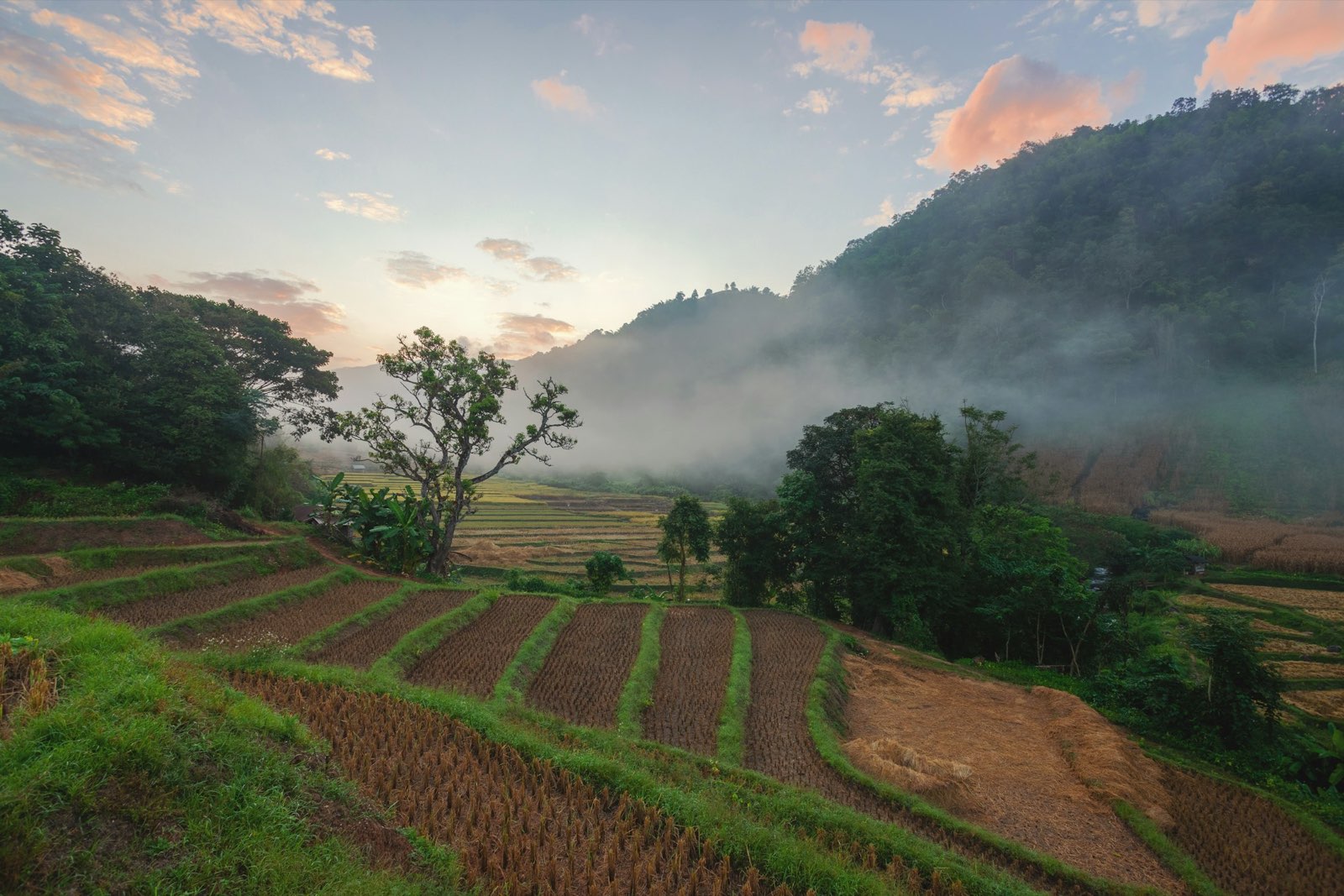
It helps to be honest about the starting point. Many Thai paddy soils, especially in the Northeast, are not naturally rich. They tend to be sandy, somewhat acidic, low in organic carbon, and limited in their ability to hold onto nutrients. That is difficult ground to farm well, season after season.
Biochar works directly on those weaknesses, through a small set of mechanisms that have been measured repeatedly:
Physical structure. Biochar's honeycomb of micro and meso pores lowers soil bulk density and increases the volume of water and air the soil can hold at once. In a paddy that swings between flooded and drained, this matters: roots get oxygen during the dry phase, and the soil retains plant-available water for longer after each draining.
Nutrient retention. Negatively charged sites on the biochar surface hold cations such as potassium, calcium, magnesium, and ammonium. Research on paddy and similar soils has recorded gains in cation exchange capacity in the range of 13 to 36 percent where biochar was applied. Less fertiliser leaches out with each flooding cycle. More of what the farmer paid for stays in the root zone.
Organic carbon. The same studies record increases in soil organic carbon of 24 to 44 percent. That is not only a carbon-removal claim. Organic carbon underpins almost everything else a healthy soil does, from water holding to microbial activity to long-term fertility.
Acidity buffering. Most biochars are slightly alkaline. Worked into acidic Thai paddy soils they nudge pH towards neutral, where rice nutrient uptake is most efficient. This is small per kilogram but consistent across seasons.
For the plant, that combination tends to show up as yield. Multi-year field studies across tropical and East Asian rice systems have found grain yield increases broadly in the range of 5 to 12 percent when biochar is used well, particularly when it is paired with fertiliser rather than used to replace it.
5 to 12 percent yield gains have been recorded in multi-year paddy trials when rice straw biochar is applied well and paired with fertiliser.
The methane question, answered honestly
Flooded rice paddies are one of agriculture's significant sources of methane. It is a fair question to ask whether adding biochar helps or hurts.
The encouraging finding is that well-managed biochar can reduce methane emissions from paddy soil. Multi-year field experiments have recorded reductions in the range of 22 to 40 percent, achieved because biochar improves soil aeration and shifts the balance of soil microbes away from the methane-producing organisms.
But there is a nuance worth respecting, because overselling this helps no one. In its first season, freshly made biochar can sometimes do the opposite and nudge methane emissions up. The reliable reductions come from biochar that is well produced, applied at a sensible rate, and combined with good water management, particularly the practice of alternate wetting and drying rather than continuous flooding. Biochar is a powerful tool here, but it is a tool, not a magic switch.
The salt problem under Isan, and where biochar fits
One of the quieter pressures on Northeast Thai farming has nothing to do with rainfall or markets. It is salt. Land Development Department survey work puts saline-affected land in the Northeast at around 17.8 million rai, with about 1.5 million rai in the severe class, 3.7 million rai moderate, and 12.6 million rai lightly affected. A further 19.4 million rai is classed as at risk of becoming saline. Put together, roughly a third of Isan is either dealing with soil salinity already or carries the geology and water table to develop it.
The trend is the wrong way. Hotter dry seasons concentrate salts at the surface as water evaporates. Heavier wet-season events flush salts through the profile in pulses that damage roots. As the climate shifts, the salt problem hidden under Isan gets harder, not easier.
Biochar does not desalinate soil. What it does, on the evidence available, is help a salinity-stressed crop perform better in that soil. The mechanisms are familiar from the paddy work above. Biochar's pore structure holds fresh rain or irrigation water in the root zone for longer, which helps dilute salt concentrations around the roots. The negatively charged surfaces preferentially hold useful cations such as potassium and calcium and can buffer some of the sodium uptake into the plant. Over time, the organic carbon and microbial activity it supports rebuild soil structure in ground that salt has stripped of life.
For a Northeastern smallholder working land that has lost yield year after year to creeping salt, this is a meaningful angle. Biochar made from local rice straw, returned to the same plot, addresses two problems with the same material: the smoke from the harvest that should not have been there, and the salt under the field that should not be growing.
The Land Development Department holds the canonical maps and rehabilitation playbook for Thailand's saline-soil zones. A practical biochar programme in Isan should be sequenced alongside that work, not in parallel to it.
The carbon that stays in the ground
This is the part that open burning can never offer. Burn the straw and its carbon is in the atmosphere by evening. Convert it to biochar and work it into the soil, and that carbon stays underground for a century or more.
That permanence is measurable, through the hydrogen-to-organic-carbon ratio that international carbon standards use to verify long-term storage. It is also what makes biochar credible in carbon markets. As carbon credit systems formalise in Thailand, the durable carbon stored under a rice field is increasingly something that can carry real value, opening a potential income stream for the farmers and cooperatives doing the work.
Using it well: practical notes
A few principles matter more than the rest:
Application rate. Research has tested everything from light rates near 2.8 tonnes per hectare up to very heavy rates above 20. For most farmers, a moderate rate applied consistently is more practical and more economical than a single heavy dose.
Charge it first. Raw, dry biochar applied straight from production can briefly compete with the crop for nutrients. Letting it absorb nutrients first, by mixing it with compost or manure before application, avoids that and lets it perform from the start.
Work it into the topsoil. Biochar does its job in the root zone. It should be incorporated into the topsoil rather than left sitting on the surface where it can simply blow or wash away.
Add to your system, do not replace it. The strongest results come from biochar used alongside existing fertiliser, improving how efficiently that fertiliser works, rather than as a straight substitute for it.
Start with a trial plot. Every field is different. The sensible approach is to treat one section, leave another as it is, and compare across a full season before committing the whole farm.
Closing the loop
Used this way, rice straw biochar quietly closes a loop that open burning leaves broken. The straw the field produced goes back into that same field as a soil improver. The carbon stays in the ground instead of in the air. The smoke never happens. The harvest gets stronger.
Turning the residue of Thai agriculture into exactly this kind of lasting value, at the scale the problem demands, is the work Enable Earth exists to do.