
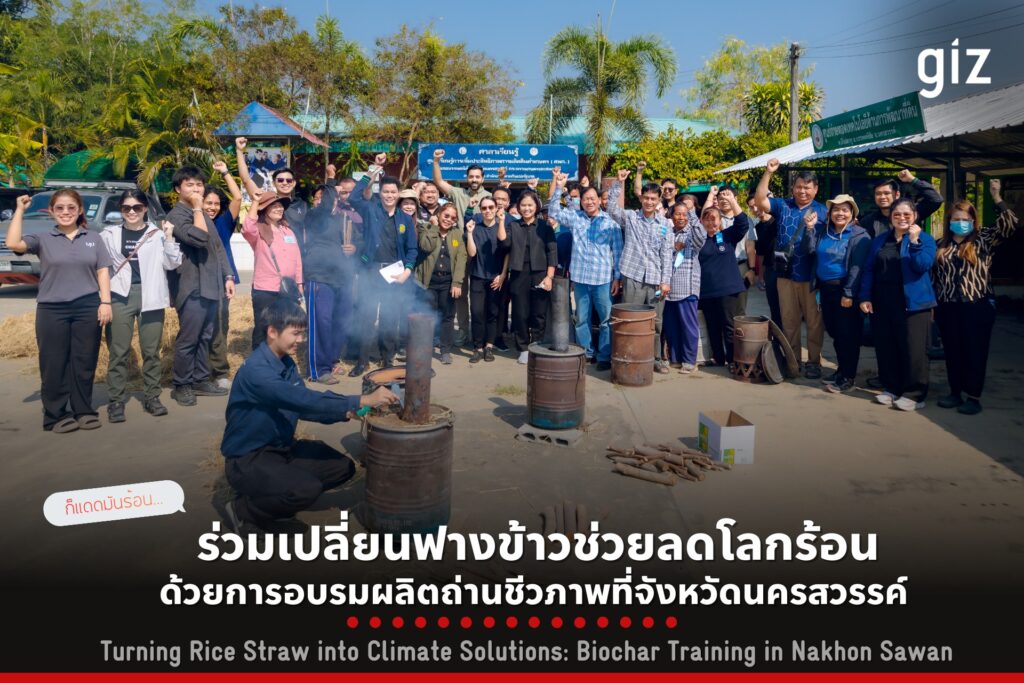
On 14 January 2026, the TGC EMC project (Thai-German Cooperation on Energy, Mobility and Climate), implemented by GIZ Thailand (German Agency for International Cooperation), together with Planet2050 and Enable Earth, held a hands-on biochar training with 17 selected farmers in Nakhon Sawan, focusing on turning rice straw, which is often burned after harvest, into a valuable resource. With PM2.5 levels currently rising across the country, agricultural residue burning is one of the major sources of air pollution in Thailand.


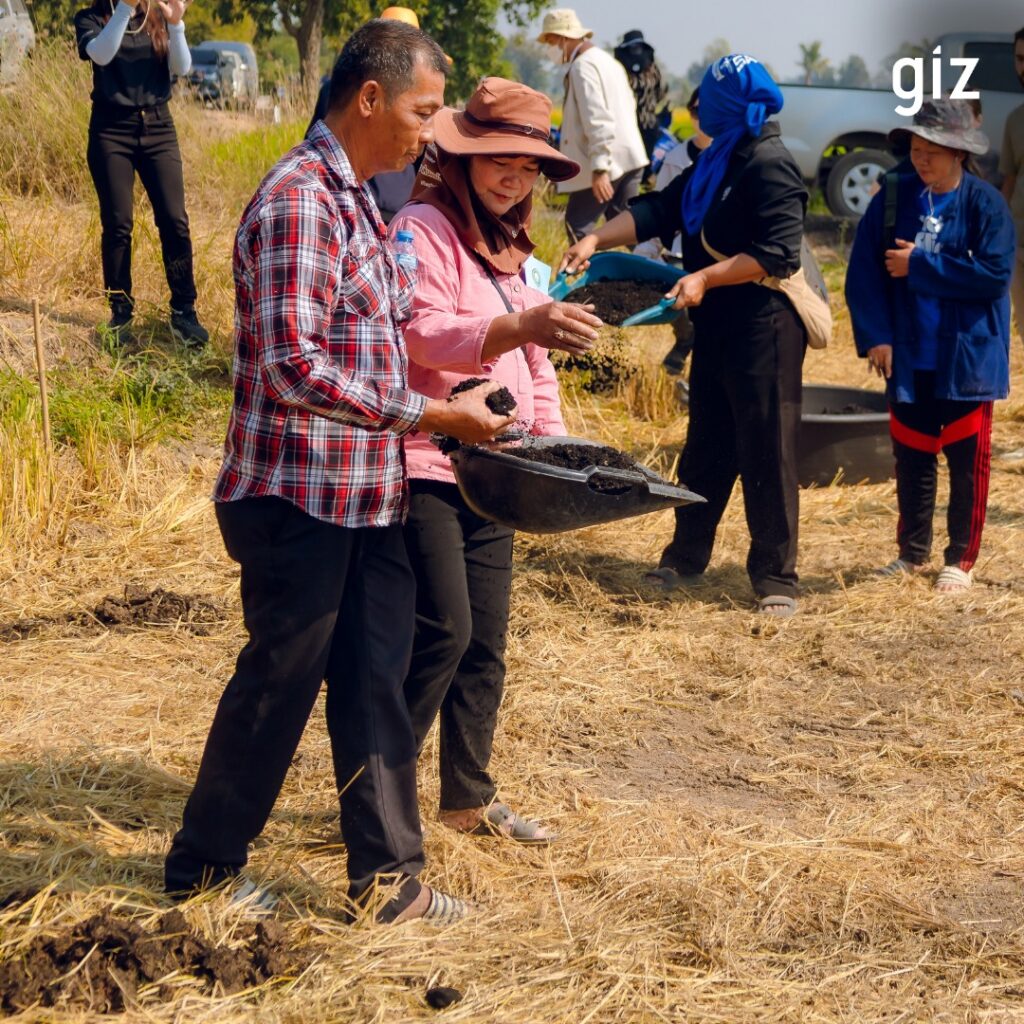
Farmers learned practical techniques to convert this agricultural residue into biochar and how to apply it to their soils. Biochar can significantly improve soil health by enhancing water retention, nutrient availability, and microbial activity. Beyond agriculture, it also has versatile applications, including in construction materials and other industrial products.
Most importantly, biochar offers a double climate benefit: it reduces emissions from open burning and locks carbon into a stable form for hundreds years. However, running such as activities is often not financially viable for farmers. New finance mechanisms now make this possible, especially in global carbon markets, where companies are turning to high-integrity, durable Carbon Dioxide Removal (CDR) certificates to support their net-zero strategies.
This training marked an important first step toward producing biochar from rice straw at a larger scale. Stay tuned to see how Nakhon Sawan is finding sustainable solutions for its agricultural residues!