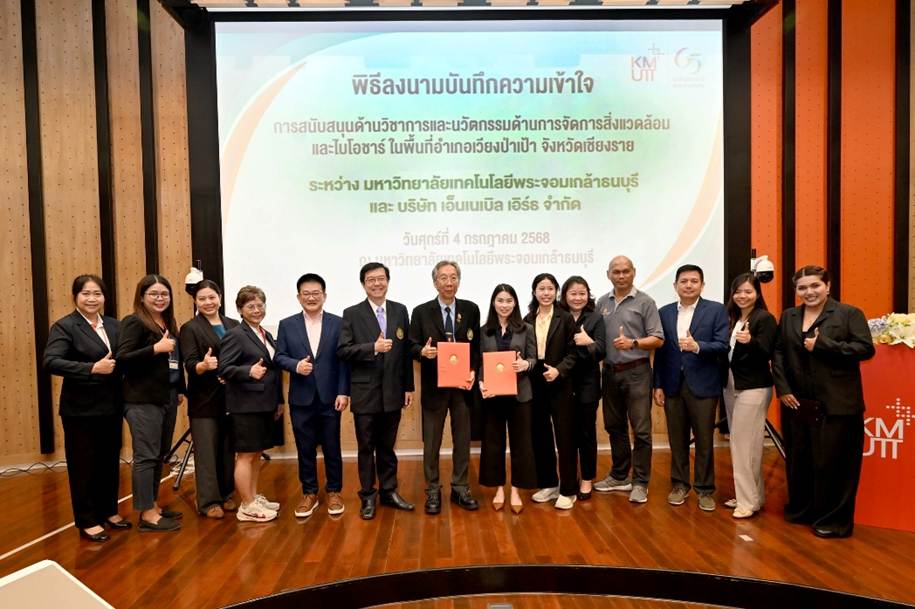
Enable Earth Receives Climate Action Leadership 2026 Award for Advancing Biochar Carbon Removal in Thailand
Recognition at CSCAP 2026 highlights an integrated approach to biomass management, durable carbon storage and more resilient agricultural supply chains.
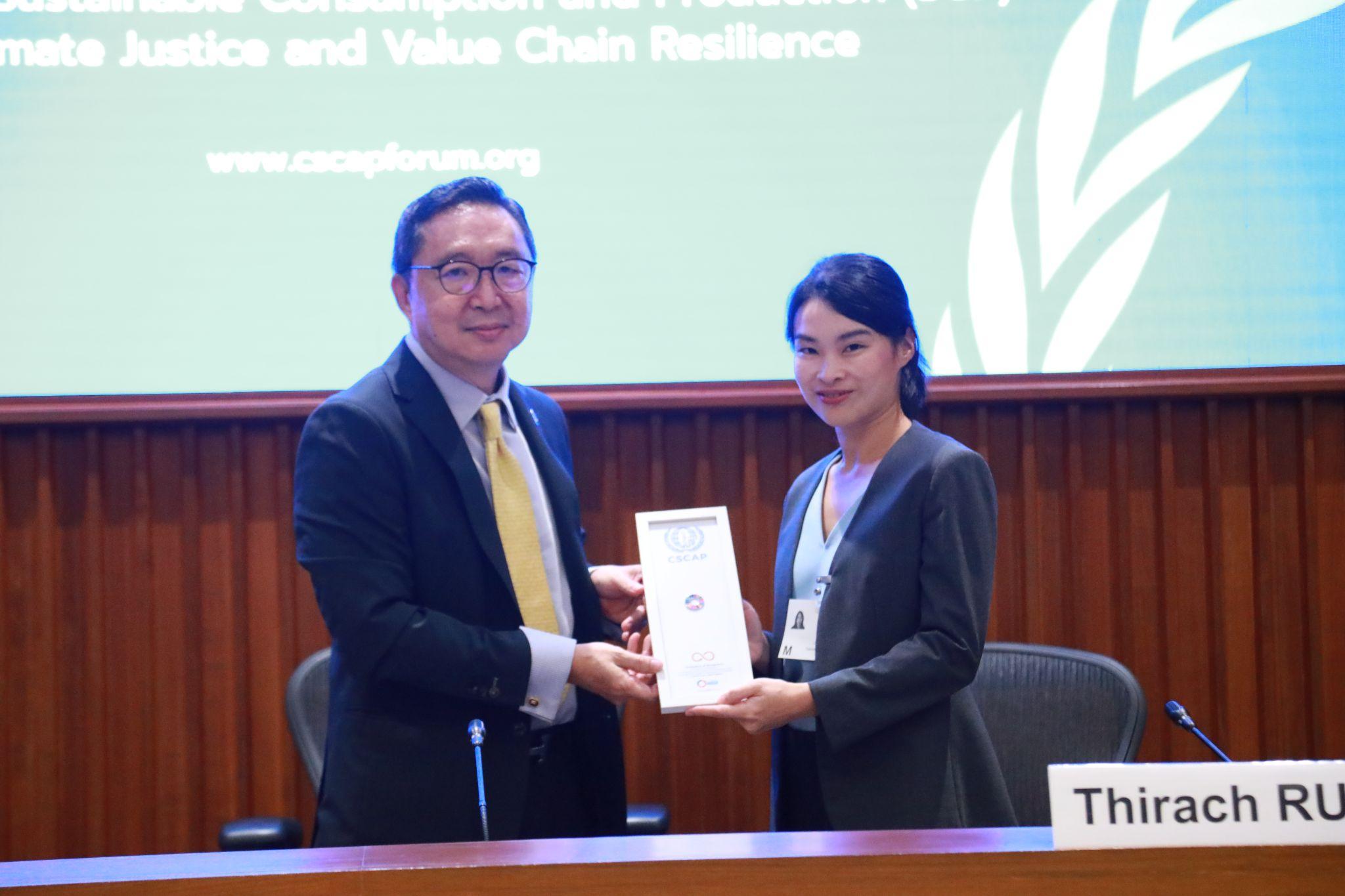
Enable Earth is deeply honored to receive the Climate Action Leadership 2026 Award at the Climate & Sustainability Capital Forum (CSCAP 2026): Accelerating Sustainable Consumption and Production for Climate Justice and Value Chain Resilience in Asia-Pacific, held at the United Nations Conference Centre in Bangkok.
This recognition marks another important step in Enable Earth’s journey to help organizations translate their climate commitments into measurable and practical climate action.
It also reflects our commitment to transforming agricultural and industrial biomass residues into carbon-negative solutions that support more circular, transparent, and resilient agricultural supply chains.
Three interconnected challenges for agricultural value chains
Thailand is a major producer, processor, and exporter of agricultural and biomass-based products. These sectors play an important role in the country’s economy, but their long-term sustainability and competitiveness are increasingly affected by three interconnected challenges:
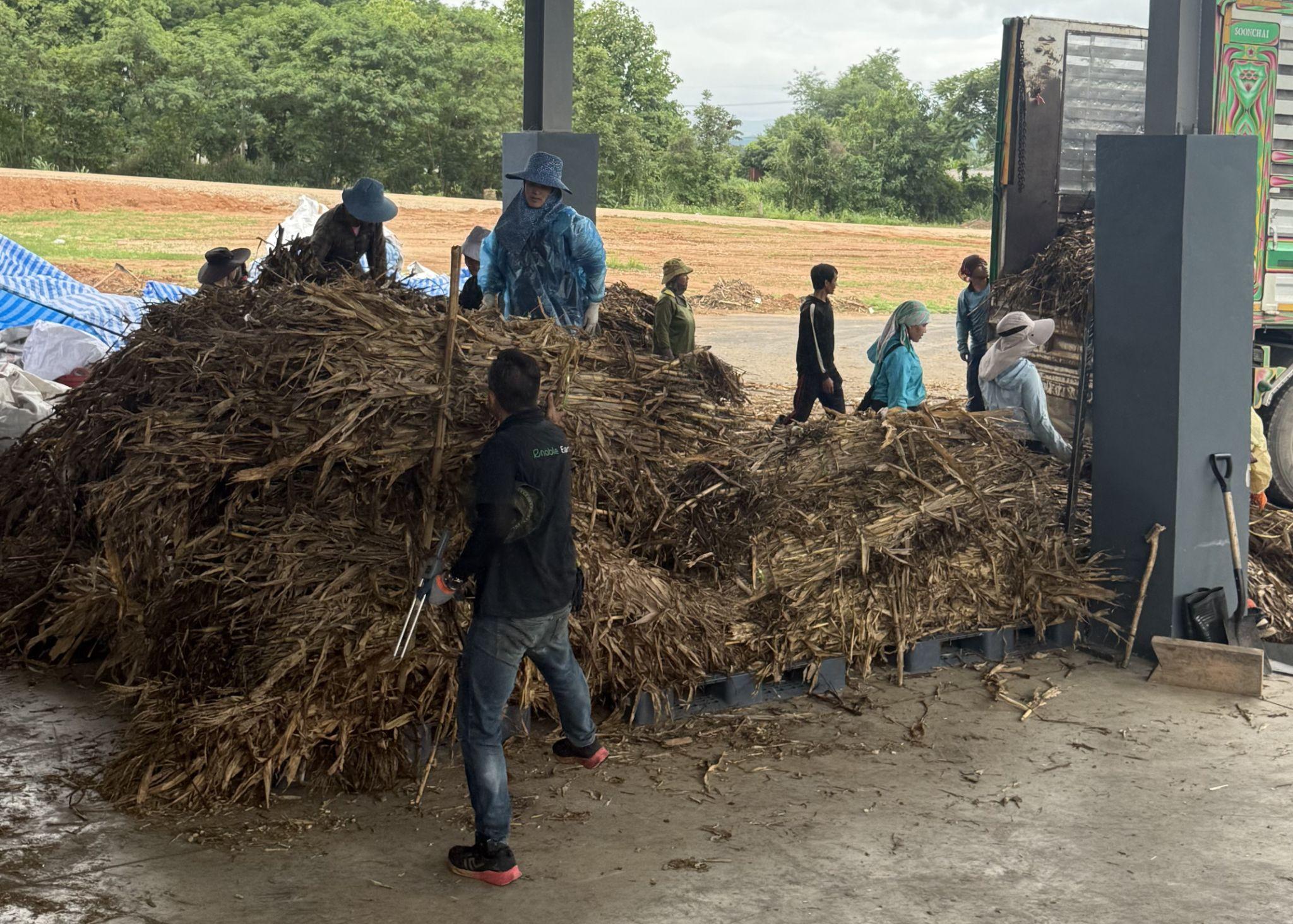
- Sustainable biomass residue management Agricultural production and processing generate significant quantities of biomass residues. When these materials are burned, left to decompose, or managed without an effective utilization pathway, they can contribute to air pollution, greenhouse gas emissions, and the loss of resources that could otherwise create value.
- Scope 3 emissions Food, agricultural, and manufacturing companies face growing expectations from customers, investors, regulators, and international markets to address emissions throughout their value chains. However, many organizations still lack practical, traceable solutions that connect emissions reduction targets with real activities on the ground.
- Soil degradation Declining soil organic matter, nutrient loss, erosion, acidity, and reduced water-holding capacity can affect agricultural productivity and increase farmers’ dependence on external inputs. These challenges can ultimately weaken the resilience of the entire supply chain.
Enable Earth is developing integrated solutions that address these challenges together.
Connecting biomass management, carbon removal, and soil restoration
At CSCAP 2026, Enable Earth shared its approach under the theme:
SDG 12, 13 & 15 Alignment in Agriculture: De-risking Value Chains and Safeguarding Terrestrial Ecosystems.
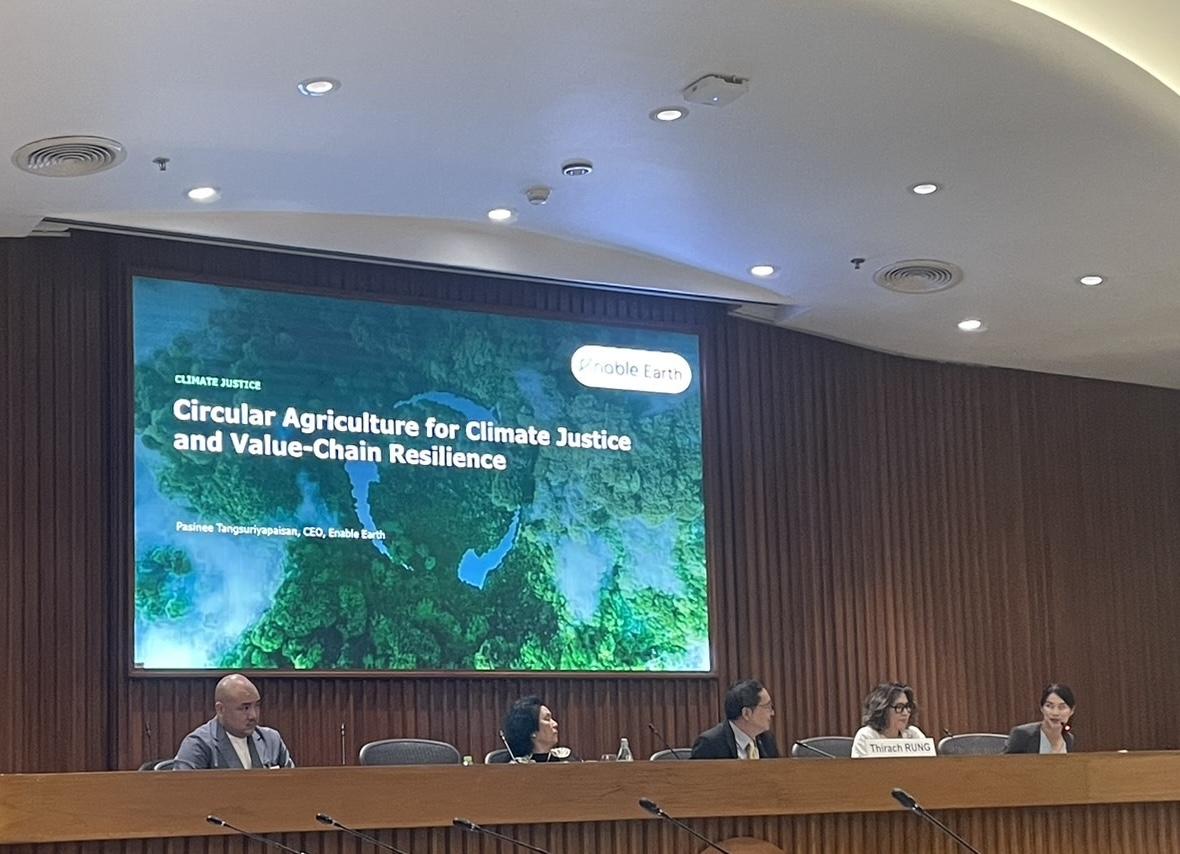
We discussed how biochar carbon removal can connect responsible biomass residue management with long-term carbon storage, soil restoration, Scope 3 climate action, and new economic opportunities for local communities.
Through a controlled production process, suitable biomass residues can be converted into stable biochar. When supported by responsible feedstock sourcing, rigorous monitoring, traceability, quality control, and appropriate end use, biochar can provide multiple forms of value:
- Creating a productive alternative to the open burning or disposal of biomass residues
- Removing and storing atmospheric carbon in a durable form
- Supporting soil health, water retention, and more efficient nutrient management
- Enabling companies to take measurable climate action within agricultural supply chains
- Creating additional income and employment opportunities for farmers and local communities
This integrated approach supports the alignment of SDG 12: Responsible Consumption and Production, SDG 13: Climate Action, and SDG 15: Life on Land.
Technology must be supported by the right model
Technology alone is not enough to deliver climate impact at scale.
Climate projects can grow sustainably only when the technology is supported by the right operational, commercial, monitoring, and community-engagement models. Projects must be capable of operating reliably, demonstrating measurable results, distributing value fairly, and responding to the needs of both businesses and local stakeholders.
Enable Earth is therefore working beyond biochar production itself. We develop end-to-end models covering biomass sourcing and management, industrial production, monitoring and traceability, carbon project development, biochar applications, and collaboration with farmers, researchers, companies, and local communities.
Our goal is to make climate action implementable—not only ambitious.
Turning climate commitments into measurable action
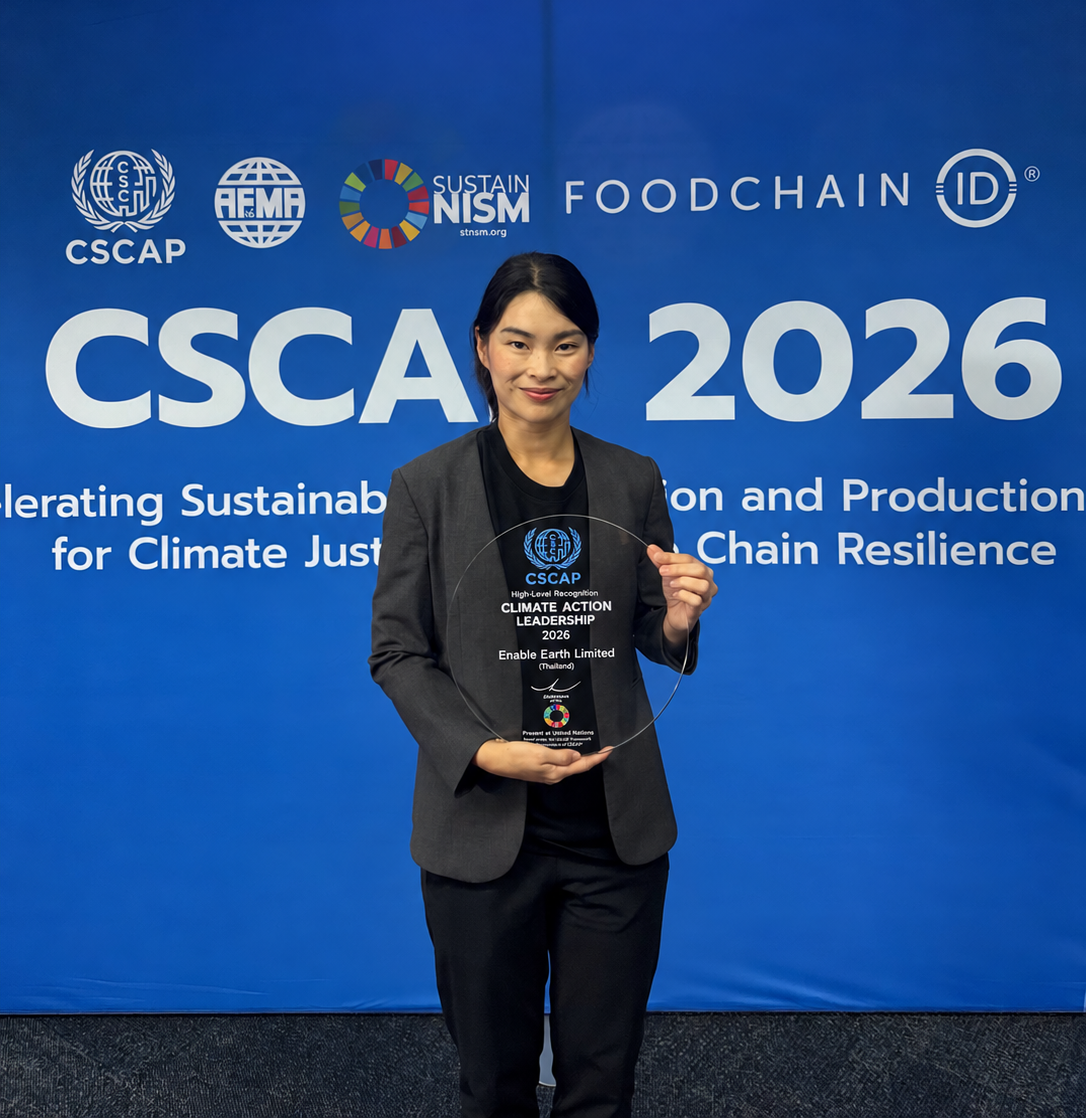
We sincerely thank the Asia-Pacific Agricultural and Food Marketing Association (AFMA), FeedUP@UN, Sustainism, our partners, and everyone who has contributed to this journey.
The Climate Action Leadership 2026 Award reinforces our determination to continue building solutions that create measurable climate, environmental, social, and business value.
Enable Earth looks forward to collaborating with food companies, agricultural processors, manufacturers, global brands, and other forward-looking organizations seeking to transform biomass residues into long-term value, address Scope 3 emissions, and strengthen the resilience of their agricultural supply chains.
Together, we can translate climate commitments into action that is measurable, verifiable, and capable of creating lasting value for all stakeholders.
Interested in developing a biomass or biochar project? Talk to Enable Earth.