From Workshop to Farm: Producing Biochar from Rice Straw
A rice-straw biochar pilot in Nakhon Sawan moves from farmer workshop to real-world field testing.
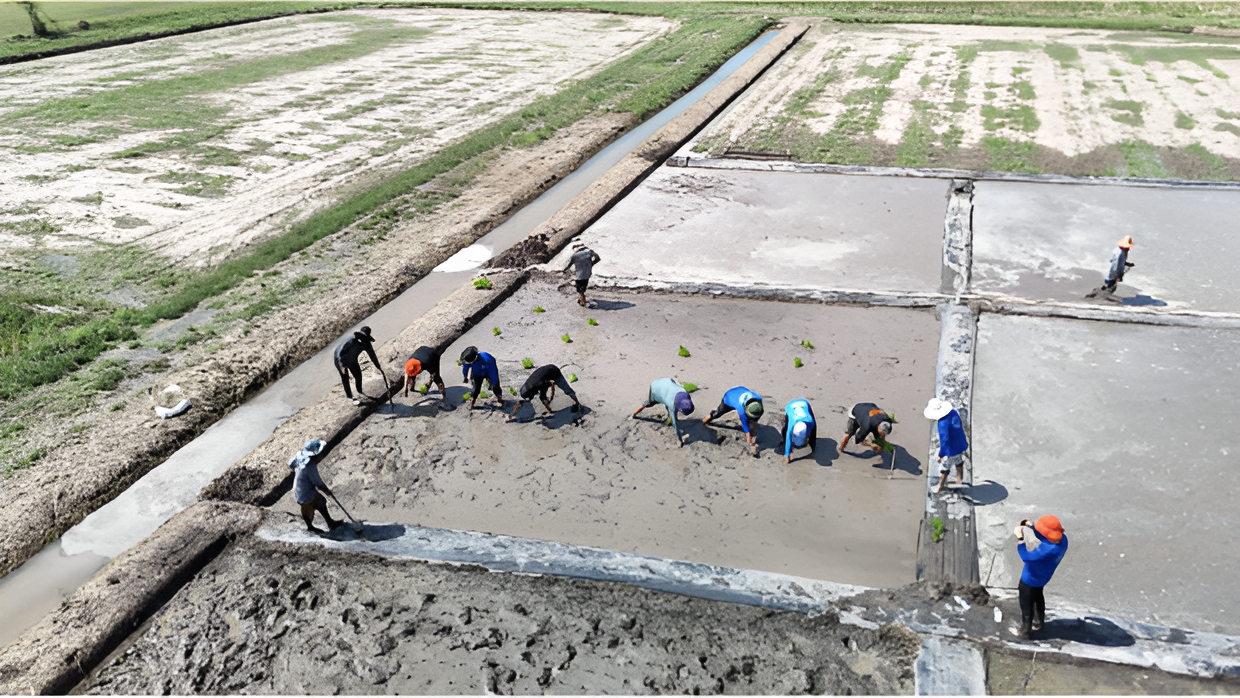
The journey began in January 2026, when GIZ, Planet2050, local agricultural authorities, and Enable Earth organized a workshop in Nakhon Sawan for more than 40 local farmers (project website).
The workshop introduced farmers to the process of converting agricultural waste to biochar. It demonstrated how rice straw—traditionally burned after harvest—could instead be converted into a valuable biochar soil amendment that improves soil health while permanently storing carbon.
The enthusiasm from both farmers and local authorities quickly led to the next phase: a real-world field demonstration. Rather than discussing biochar in theory, the project set out to evaluate its performance under actual farming conditions.
As the GIZ project team explained:
“If our biochar pilot projects using rice straw are successful, this could be a real turning point for many countries in the region. Farmers would then have a strong incentive to fundamentally change their current practices.”
Closing the Loop: From Rice Straw to Biochar
Following the workshop, rice straw collected from local farms was transported to Enable Earth's production facility, where it was converted into high-quality biochar through pyrolysis.
The biochar was then returned to the very same rice fields where the straw had originated. This closed-loop approach demonstrates the circular economy in practice—transforming agricultural waste into a resource that improves soil health, aids in PM2.5 reduction by preventing open burning, and permanently removes carbon from the atmosphere.
Designing a Real-World Field Trial
On 14 May 2026, the project entered its next stage.
Biochar was applied to a one-rai demonstration rice field in Nakhon Sawan to evaluate how it could be integrated into practical rice cultivation.
Rather than comparing only biochar against conventional farming, the trial explored how biochar could work alongside existing agricultural practices.
The demonstration included four primary treatments:
- Conventional farming using chemical fertilizer only
- Biochar application
- Biochar combined with composted animal manure
- Biochar combined with composted animal manure and microbial solutions
To further evaluate nutrient-use efficiency, each treatment was tested under different fertilizer application rates:
- 100% of the farmer's conventional fertilizer rate
- Two-thirds of the conventional rate
- Half of the conventional rate
This design allows researchers to assess not only whether biochar improves crop performance, but also whether it can help farmers reduce fertilizer inputs while maintaining productivity.
Early Results: How Biochar Improves Rice Crop Yields
After just over one month of monitoring, the first observations were encouraging.
Rice grown in biochar-treated plots was approximately 10% taller than the conventional control plots.
Even more notably, plots receiving biochar co-composted with animal manure produced approximately 68–70% more tillers than the control treatment.
While the trial will continue throughout the growing season, these early results provide encouraging evidence that biochar can improve early crop establishment and support healthier plant development. For broader context on how biochar behaves in paddy systems, see Biochar in Thai Rice Farming.
Learn more about Enable Earth’s climate solution
Transforming Waste. Restoring Soil. Removing Carbon. Curious about how Enable Earth's biochar solutions can help you achieve your sustainability or agricultural goals? Please reach out to us at contact@enableearth.eco to learn more about our services and ongoing field projects in Thailand.